BHC Myeongdong: Chimaek at Sunset in Seoul’s Tourist Heart
The first sip of Terra was so cold it almost stung, and across the table my friend was already reaching for a drumstick before the foam had settled in my glass. Behind us, the sky over Myeongdong was turning that specific shade of pink-orange that only really happens in late spring in Seoul — the kind of light that makes even a plastic chair feel cinematic.
This is how I ended up reviewing BHC’s Myeongdong flagship (BHC 명동 본점). Not because I planned a serious tasting, but because chimaek (치맥 — the contraction of chicken and maekju, beer) at golden hour is one of those small, perfect Seoul rituals I think more visitors should know about. And BHC’s Myeongdong location, for all the touristy chaos around it, actually nails the experience.
location:
https://maps.app.goo.gl/VY1ySyr4XsC2iUJN8
Why BHC Myeongdong, of All Places?
Let me be honest first: as a Korean, I don’t usually go out of my way to eat in Myeongdong. It’s the neighborhood most Seoulites associate with tourists, cosmetics shops, and overpriced street food. We tend to eat there only when we’re meeting someone who’s visiting from abroad, or when we’re already in the area for something else.
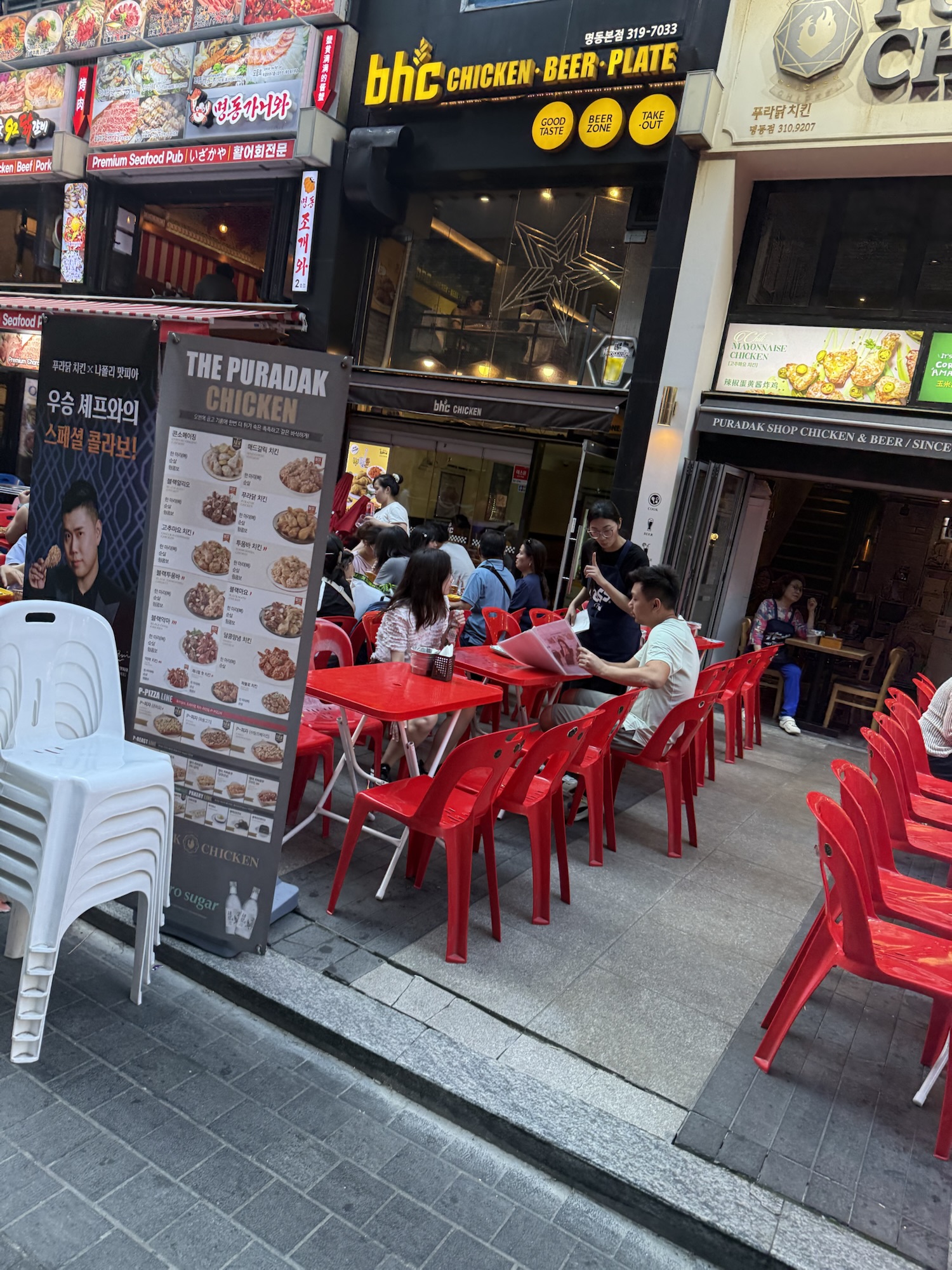
But BHC is a different story. BHC is one of the “big three” Korean fried chicken chains alongside Kyochon and bb.q — basically the McDonald’s-tier household names of chikin in Korea. Most BHC branches are small delivery-focused shops. The Myeongdong flagship is the exception: it’s a full sit-down spot, and during warm months they put tables out on the street so you can eat al fresco with a view of the alley life.
That outdoor setup is the whole reason this branch is worth a detour. Sitting inside a BHC is fine. Sitting outside one in Myeongdong, watching the neon signs flicker on as the sun drops behind the buildings, is something else.
Getting There
Myeongdong is one of the easiest neighborhoods to reach in Seoul. From Seoul Station it’s literally one stop on subway Line 4 to Myeongdong Station, then about a 5–7 minute walk through the main shopping street. From Hongdae or Gangnam, you’re looking at 20–25 minutes by subway with one transfer.
The restaurant itself sits on a corner along the main Myeongdong drag, so once you’re in the neighborhood you basically can’t miss the orange BHC signage. If you’re staying in any of the central Seoul hotel clusters — Jongno, Euljiro, Namsan — you can probably walk there in under 20 minutes.
I’d recommend arriving around 6:30 PM in summer, or 5 PM in winter. You want to be seated and have your first beer in hand by the time the sky changes color.
The Chicken: Huraideu, the Classic
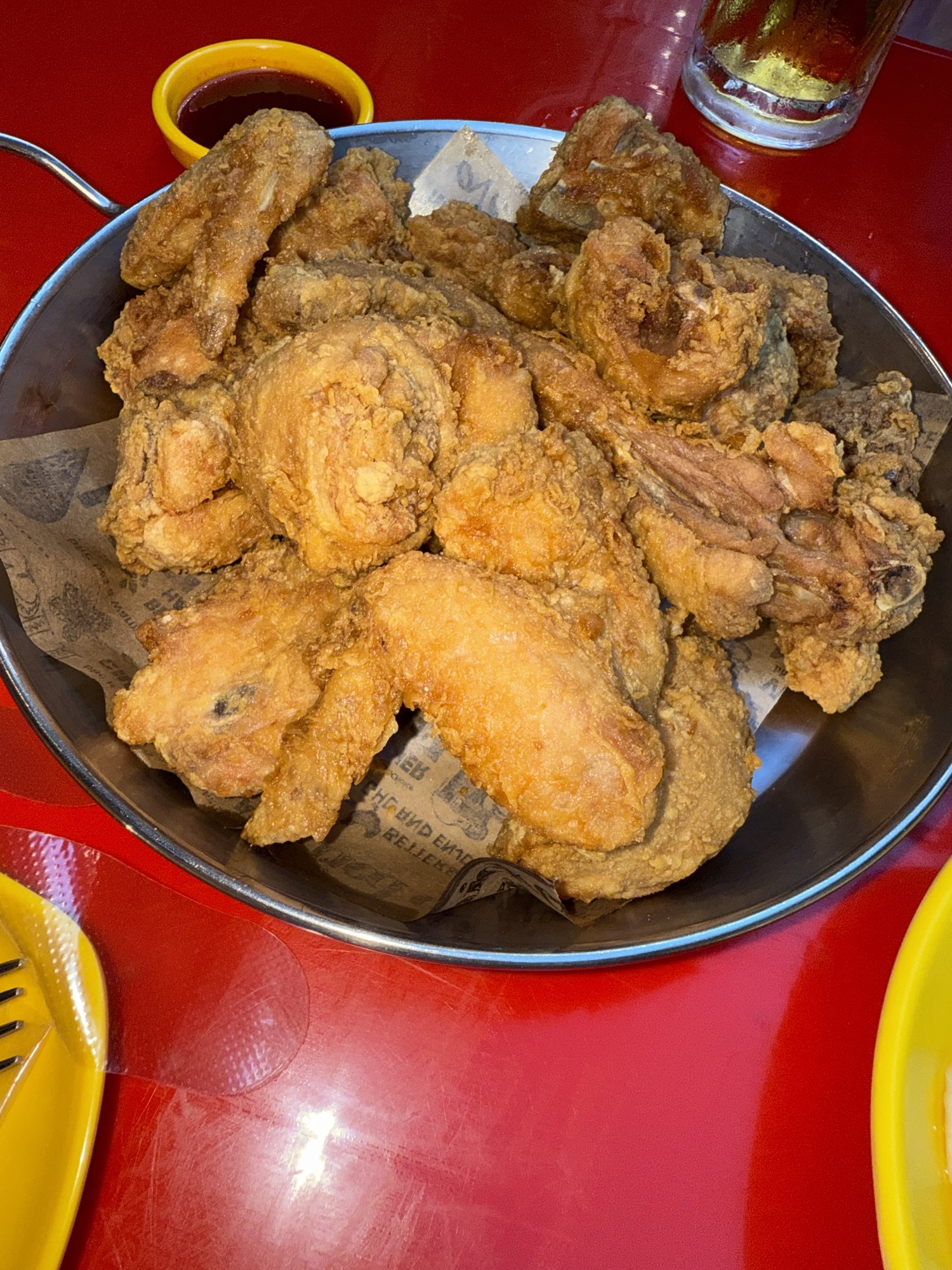
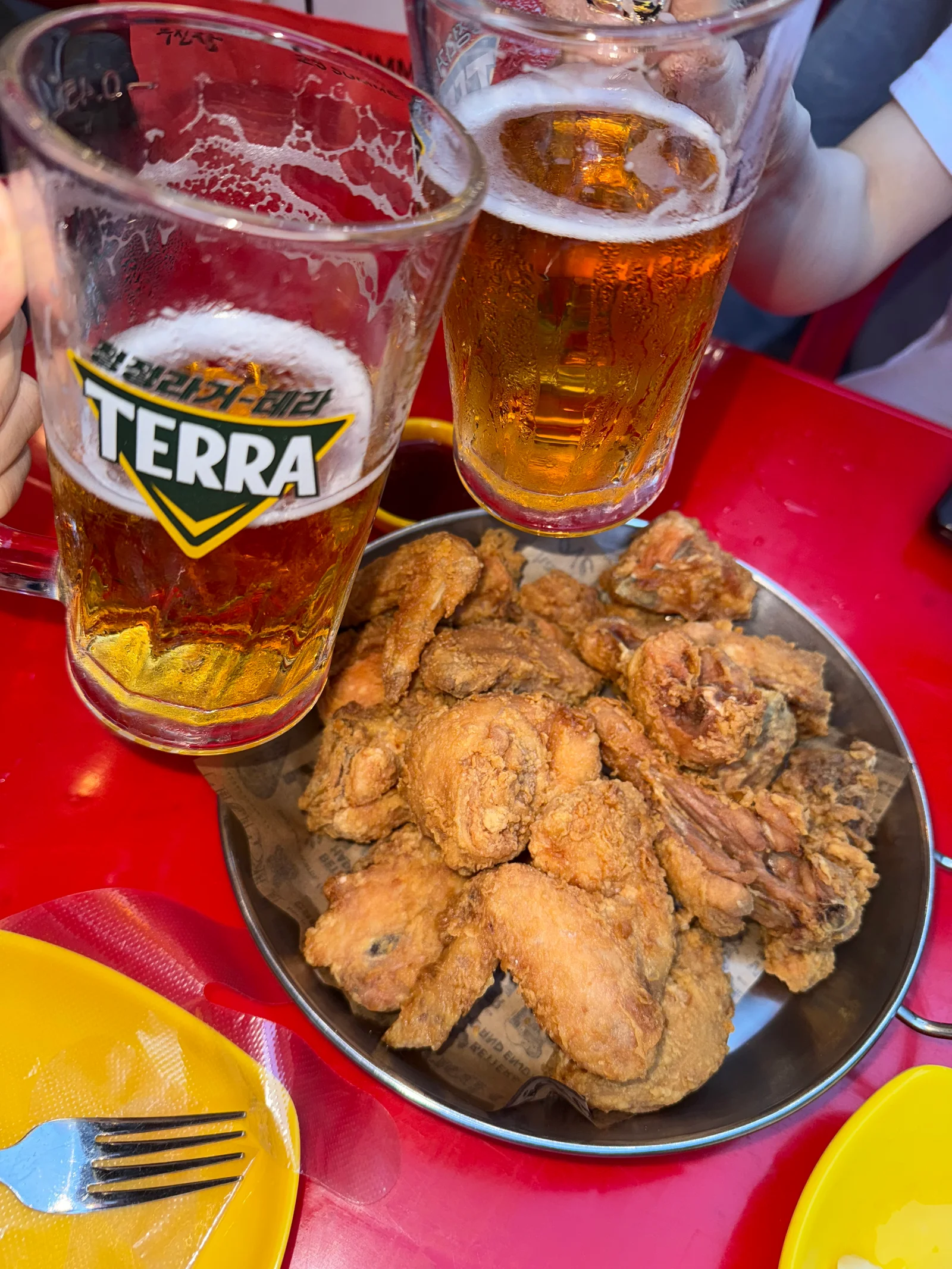
We ordered the Huraideu (후라이드, 24,000 KRW / ~$18 USD), which is BHC’s plain fried chicken — no sauce, no glaze, just a whole chicken cut into pieces, battered and double-fried.
If you’ve only ever had Korean fried chicken in the form of the bright red, sticky yangnyeom style that’s become famous abroad, the plain Huraideu can feel almost shockingly restrained. There’s no gochujang glaze, no soy-garlic lacquer. Just chicken, flour, salt, and the technique.
And the technique is the entire point.
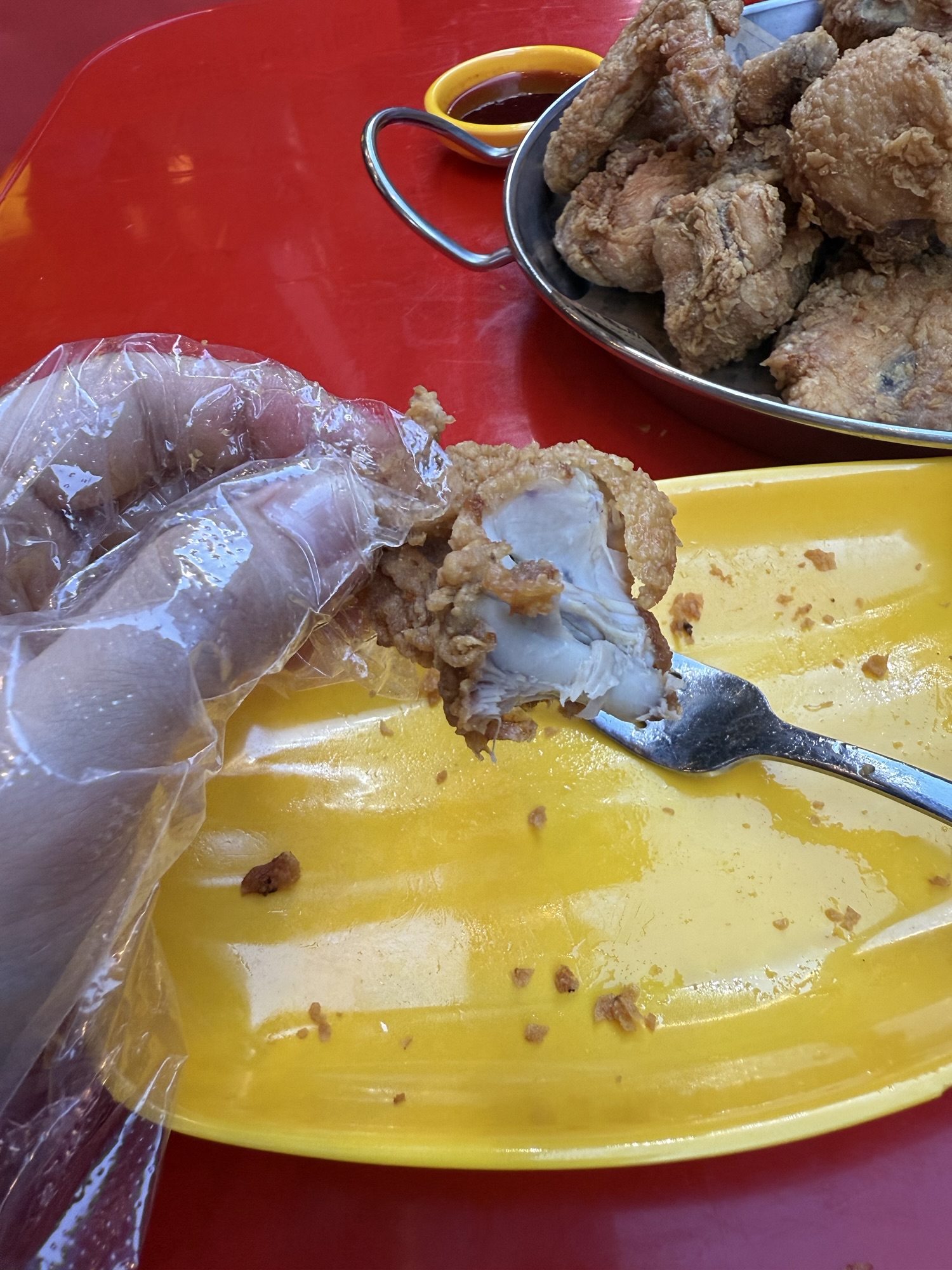
The crust is thin, deeply craggy, and audibly crisp — the kind of crunch that makes the person across the table look up. Underneath, the meat is genuinely juicy, with a faint pepper-and-garlic seasoning in the batter itself. The closest American comparison I can think of is really good Nashville hot chicken without the spice — that same shattering crust, that same moisture in the meat — but lighter, less greasy, with a cleaner finish.
We didn’t order any sauces on the side. With cold beer, the plain Huraideu is, in my opinion, the most honest version of Korean fried chicken you can have. It’s also the version Koreans themselves order most often when we just want to drink.
About the Beer
We each had two draft Terras (생맥주 테라, 6,500 KRW / ~$5 USD per mug). Terra is one of Korea’s two dominant lagers right now (the other being Cass), and it leans crisper and slightly more bitter than Cass, which makes it a better partner for fried food.
Two mugs each was the right call. One isn’t enough; three is when you start ordering a second chicken you didn’t really need.
The Atmosphere: Street-Side at Sunset
This is the part I want foreign readers to understand, because it’s not what you’d expect from a chain.
The outdoor tables are simple — glossy red lacquered tops, plastic stools, yellow side plates that look almost cartoonishly cheerful against the chicken platter. It’s not designed; it’s deployed. And that casualness is exactly the vibe Koreans associate with good chimaek.
When we arrived, maybe a third of the outdoor tables were taken. By the time it got dark, every seat was full and there was a small queue forming. The crowd was probably 60% foreign tourists and 40% locals, which is unusual — most chimaek spots in Seoul skew almost entirely Korean. Here, you’ll hear English, Mandarin, Japanese, and Korean all overlapping at once, and somehow it works.
As the sky darkened, the neon signs along the street started lighting up one by one, and the temperature dropped just enough to make the cold beer feel even better. There’s a Korean phrase, 분위기 좋다 (bunwigi jota — “the mood is good”), that gets used a lot in moments like this. It’s hard to translate exactly, but it’s the feeling of a setting that does most of the work for you.
How Foreigner-Friendly Is It?
Very. Almost surprisingly so.
There’s an English menu — not a sad one-page printout, but a proper menu with photos and descriptions. Every table has a hochulbel (호출벨, a wireless call button) that you press when you’re ready to order or need something; a staff member comes over within a minute or two. This is standard in Korean restaurants but worth flagging because foreign visitors sometimes sit and wait politely for service that isn’t going to come otherwise.
The staff at this branch handle English orders with no visible stress, which is not something I’d say about every Korean restaurant. If you point at the menu and say the chicken name, you’ll be fine.
One small note: the table will likely have a basket of pickled radish (chicken-mu, 치킨무) brought out automatically. It’s free, it’s meant to cut the richness of the fried chicken, and yes, you should eat it. The cool, sweet-vinegary crunch resets your palate between bites.
Price and Value
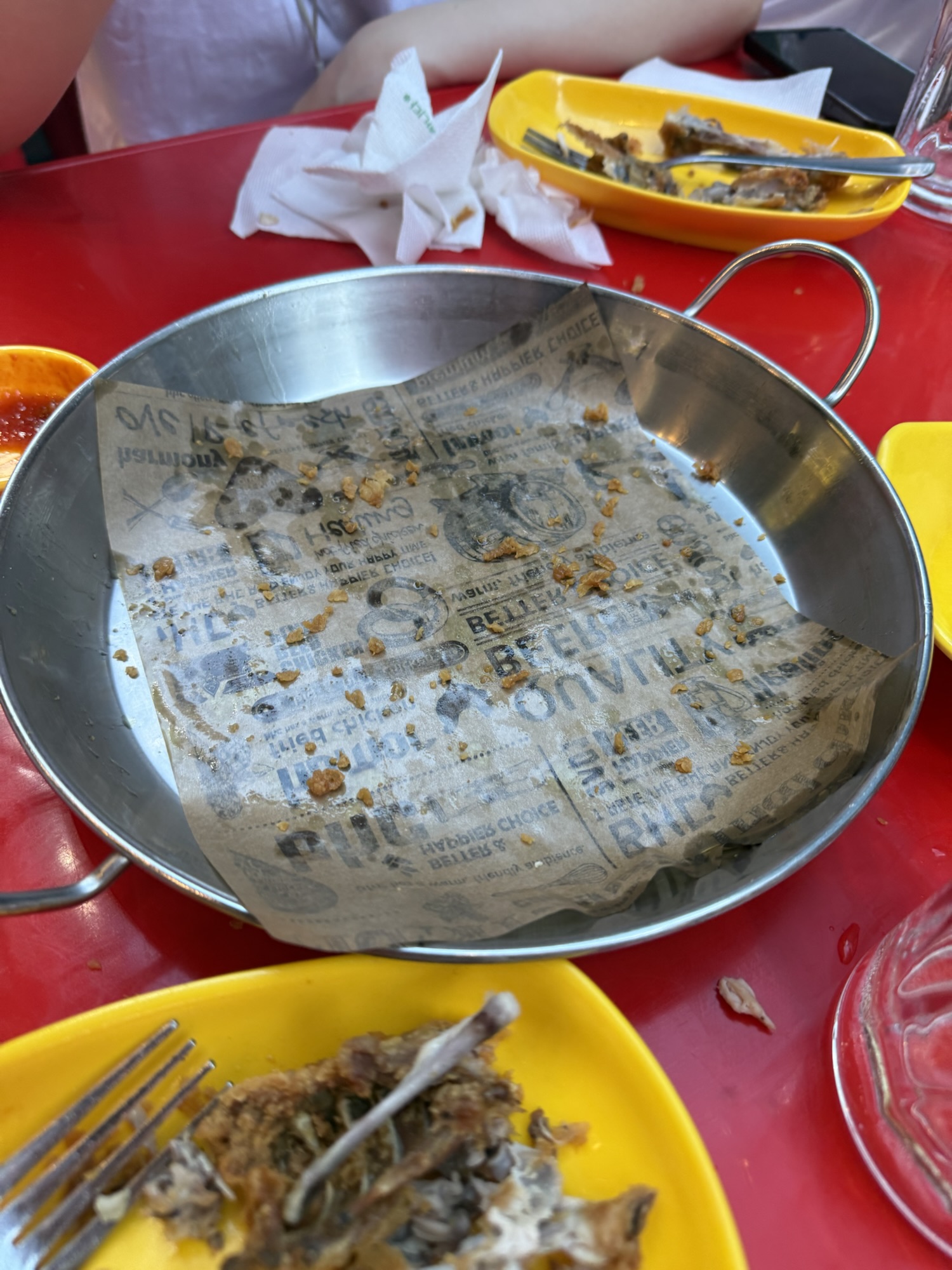
Our total bill came to 50,000 KRW (~$38 USD) for one whole chicken and four beers between two people. Split, that’s about $19 per person for a full meal with drinks in central Seoul.
Is it cheap? By Seoul standards, no — a whole BHC chicken is more expensive than what locals consider “reasonable” for fried chicken (a lot of Koreans have feelings about chicken prices crossing the 20,000 KRW line over the past few years). By tourist-area Seoul standards, and by the standards of any major Western city, it’s a genuine bargain. You could not eat this well in Manhattan or central London for $19 a head.
The value math also depends on what you’re really paying for. You’re not just paying for the chicken; you’re paying for two hours of street-side seating in one of Seoul’s most famous neighborhoods at the best time of day. That part, I think, is worth it.
Tips for Visiting
A few practical things I’d tell a friend visiting from abroad:
Timing. Go for the sunset window, especially in summer. The outdoor tables are the entire point, and the light makes a real difference. Avoid lunch — it’s just a normal indoor chicken shop then.
Reservations. They don’t really take them for the outdoor tables; it’s first-come. On weekends after 7 PM, expect to wait 15–30 minutes.
What to order if it’s your first time. Stick with the plain Huraideu. The sauced versions (Bburinkle, BHC’s signature cheese-powder chicken, is the famous one) are fun, but for a first chimaek experience, the plain version teaches you what Korean fried chicken actually is.
Don’t skip the beer. I know not everyone drinks, and they do have soft drinks, but chimaek without the maek is like having pizza without cheese. If you can have one, have one. Terra is the safer-bet pour here.
Cash or card. Cards are fine, including foreign-issued ones in my experience. Tipping is not a thing in Korea, so don’t.
When we finally paid and left, the street was fully dark and the queue had doubled. Walking back toward the subway, I thought about how this kind of meal — chicken, beer, plastic stool, evening light — is one of the most ordinary things you can do in Seoul, and also one of the most specifically Korean. BHC Myeongdong isn’t a hidden gem. It’s the opposite: it’s a chain in the most touristed neighborhood in the city. But sometimes the obvious answer is the right one.